How Many Circumcised Men Regret It?
**How Many Circumcised Men Regret It?
A Deep Look at Silence, Sensation & Unspoken Loss**
By 𝘼𝙫𝙤𝙘𝙖𝙙𝙤𝙅𝙖𝙮23 | 𝘼𝙙𝙫𝙤𝙘𝙖𝙩𝙞𝙣𝙜𝘼𝙫𝙤𝙘𝙖𝙙𝙤
✌️💚🥑🍌 Genitals Shouldn’t Have Scars.
⸻
Introduction: The Question No One Asks Out Loud
Circumcision is one of the few irreversible surgeries performed on babies who cannot speak, consent, or defend themselves. For generations, society told men not only that this was normal, but that questioning it was unacceptable. Yet as information spreads and men begin to educate themselves on what the foreskin really was, regret is no longer an anomaly it’s a growing voice rising beneath a carefully maintained silence.
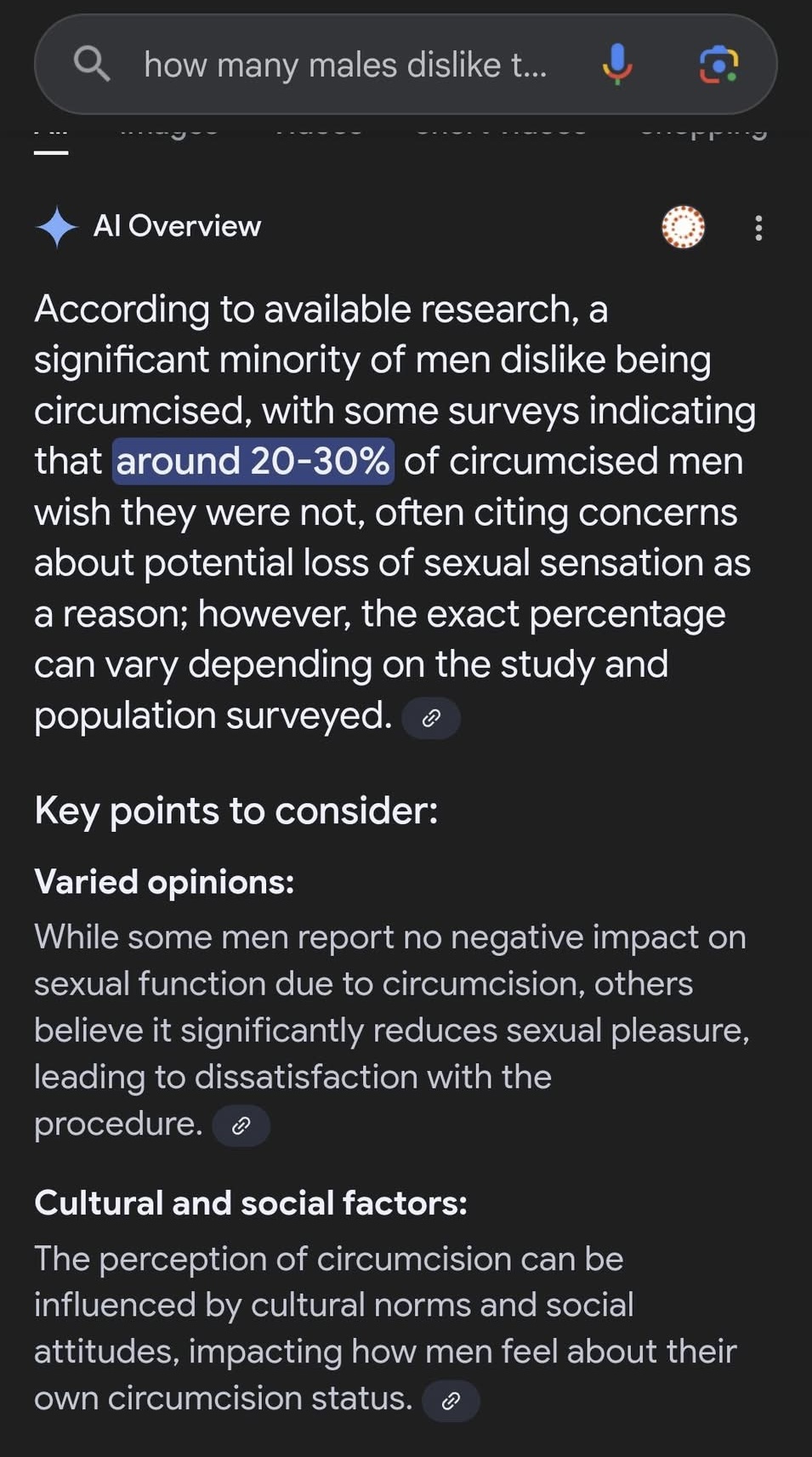
According to available research, 20–30% of circumcised men wish they had remained intact, citing sensory loss, lack of choice, and altered sexual experience as primary factors.¹ But what does it mean when nearly one-third openly express regret in a culture that conditions men not to question what was done to them?
This blog goes deeper beyond numbers into the psychology, biology, conditioning, and hidden grief of male genital reduction surgery.
⸻
I. The Reported Statistic vs. The Unspoken Reality
Studies show that roughly 1 in 3 circumcised men express dissatisfaction, but this number represents only those willing to speak up. More men remain silent not because they lack regret, but because they lack language to describe it. How do you mourn a body part you were never allowed to meet? How do you critique something everyone around you insists is “normal”?
Regret is not just a number it is suppressed memory, buried emotion, and a lifetime of “just get over it.”
If 20–30% express regret without full education, imagine how the number shifts when men finally learn what was taken.
⸻
II. The Anatomical Truth They Were Never Taught
Most circumcised men are unaware of what the foreskin contained not just skin, but an entire sensory system. Removing it is not cosmetic, it is neurological amputation. The foreskin houses:
• Fine-touch nerve endings (Meissner’s corpuscles)
• Gliding mechanism enabling smooth, natural motion
• Self-lubrication & moisture retention
• The frenulum one of the most sensitive structures of the male body
• Immune, vascular & protective functions
Never being taught this keeps regret manageable. Knowledge is the trigger that turns “I never thought about it” into “I was never given what I deserved.”
Regret grows in the dark, but explodes in the light.
⸻
III. Cultural Programming & Male Silence
Men are conditioned from childhood to be invulnerable, stoic, unfazed. We teach boys not to cry then remove a part of their genitals before they even learn words to describe pain. That is the earliest lesson in obedience.
Many men never question circumcision because society taught them:
• You’re supposed to be okay with it.
• This was done for your benefit.
• Only insecure men complain.
In reality, silence is not acceptance it is conditioning.
A man who never knew what he lost can’t easily grieve it.
⸻
IV. Why Regret Is Underreported & Misunderstood
Regret is a threat to a cultural narrative that insists circumcision is harmless or beneficial. When a man says he wishes he were intact, he challenges:
• Medical tradition
• Religious identity
• Masculine pride
• Parental decision-making
Admitting regret means confronting the possibility of violation and society gently (or aggressively) pushes that realization back underground. Shame protects the practice. Ignorance protects the system.
Regret remains invisible not because it is rare,
but because acknowledging it is painful for everyone involved.
⸻
V. When Men Learn the Truth The Statistic Shifts
As awareness rises, more men discover foreskin restoration, join support groups, and speak openly. Online communities continue to grow every year thousands reclaiming sensation and autonomy one millimeter at a time.
This becomes the revealing question:
If 20–30% regret being cut when most don’t even know what they lost what happens when they do?
That is the number no one wants to calculate.
⸻
The Hidden Costs of Circumcision
A Quick Breakdown for Readers
Physical Loss
• Nerves & fine-touch receptors
• Gliding function
• Protective coverage
• Natural lubrication & moisture
Sexual Consequences
• Reduced sensitivity over time
• Increased friction needed
• Diminished pleasure for both partners
Psychological Impact
• Lack of body autonomy
• Identity conflict or grief
• Anger toward parents/doctors
• Masculinity confusion or shame
Societal Blind Spots
• We silence male trauma
• We normalize genital cutting
• We shame men who question it
Regret doesn’t live in numbers it lives in men.
⸻
Conclusion: Regret Exists Loudly, Even When Unspoken
Circumcision regret is not a fringe experience. It’s a quiet earthquake beneath a tradition that never asked for permission. When nearly one-third publicly express dissatisfaction despite shame, denial, and cultural pressure, the message becomes undeniable:
Regret is not rare.
Regret is suppressed.
More men would speak if they knew more
and more will speak as awareness spreads.
The real question is no longer “how many regret it?”
but rather
How many would choose wholeness if they were given the chance?
🔍 Why the number may be higher than reported
Many men never even think to question circumcision because:
• They were cut as infants and told it was “normal.”
• They have nothing to compare sensation to.
• Social conditioning discourages men from expressing regret.
• Shame, ego, or sexual identity stigma prevents open discussion.
Regret is underreported, and dissatisfaction becomes more visible when men learn what was removed nerves, gliding mechanism, frenulum, vascular tissue, specialized sensory structures, etc.
There’s evidence from restoration communities, forums, and surveys that actual regret could be much higher possibly 40–60% when men are fully informed about function and structure lost.
🧩 “Even with lifelong social conditioning and censorship of foreskin anatomy, 20–30% of circumcised men still openly report regret. Imagine how much the number would climb if every man knew what he lost.”
“They told us circumcision was harmless, normal, and better.
Yet 1 in 3 circumcised men quietly wish they still had their whole body.
Silence isn’t consent it’s conditioning.”
#GenitalIntegrity
#IntactFacts
#ForeskinMatters
#CircumcisionRegret
#BodilyAutonomy
#SexualRights
#RestoreWhatWasStolen
———————————————————————-
📢 Want to Know the Truth?
👉 Watch Now: The Truth About Circumcision
Eric Clopper’s explosive, eye-opening presentation exposes the hidden truths about circumcision, its impact on men’s health, and the medical industry’s role in promoting it. If you care about bodily autonomy and human rights, this is a must-watch.
🔗 Sex & Circumcision: An American Love Story – Eric Clopper
🔗📺 https://youtu.be/FCuy163srRc?si=-I0uSf9MEV06b


Comments
Post a Comment