The Silent Cut: Why We Can Circumcise Infants but Can’t Talk About It as Adults
The Silent Cut: Why We Can Circumcise Infants but Can’t Talk About It as Adults
Written By ✌️💚🥑🍌 AvocadoJay23 | AdvocatingAvocado
Introduction: The Unspoken Reality
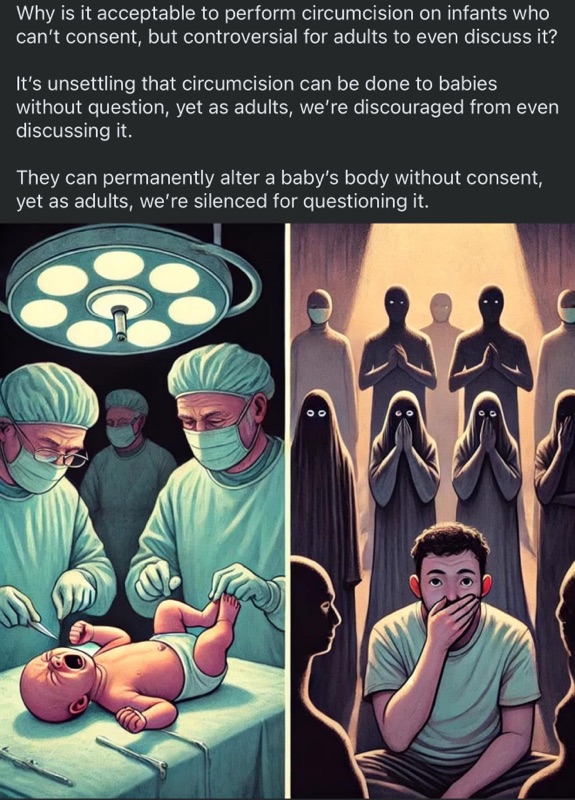
Circumcision is one of the only irreversible surgeries performed on infants without their consent. Yet, the moment we try to discuss it as adults, we’re met with silence, discomfort, or outright resistance. Why?
Many people don’t think twice about infant circumcision. It’s normalized, routine, and rarely questioned. Yet, when adults attempt to discuss its implications—ethically, medically, or personally—the topic becomes controversial, even taboo. This contradiction raises an unsettling question: If circumcision is a harmless, routine practice, why is open discussion about it met with resistance?
The cultural silence surrounding circumcision isn’t accidental—it’s a product of deep-rooted tradition, social conditioning, and institutionalized avoidance of discomfort. But if we are to claim bodily autonomy and informed consent as fundamental rights, then it’s time to confront the silence and ask the difficult questions.
The Cultural Blind Spot: Why It’s ‘Normal’ for Babies
For centuries, circumcision has been woven into religious, medical, and cultural narratives, making it one of the most unquestioned procedures performed on infants. There are several reasons why people seldom think to challenge it:
• Historical and Religious Roots: Circumcision has been practiced for thousands of years, often tied to religious or cultural identity. This deep historical foundation makes any critique of it feel like an attack on tradition, making open discussion difficult.
• Medical Justifications: Many believe circumcision is necessary for hygiene, disease prevention, or sexual health, despite modern research challenging these claims. While circumcision may offer some medical benefits in certain cases, it is far from a necessity, and many countries with low circumcision rates do not experience higher rates of medical issues.
• Parental Decision vs. Bodily Autonomy: Society largely views circumcision as a parental choice rather than an issue of bodily autonomy. This framing sidesteps the ethical dilemma of permanently altering a child’s body without their consent.
The combination of these factors creates a blind spot—one where questioning circumcision is seen as unnecessary or even offensive. Yet, if it were as harmless and beneficial as claimed, why do so many men struggle with discussing their own experiences?
The Taboo of Discussion: Why Adults Are Silenced
Despite the fact that circumcision directly affects men, open conversations about it are often met with resistance. Why?
• Cognitive Dissonance: Many circumcised men do not question the practice because acknowledging harm means confronting a deeply personal violation. Instead, defensiveness arises as a psychological shield.
• Cultural Discomfort: Conversations about circumcision inevitably touch on sensitive topics—bodily integrity, trauma, gender rights—making people uncomfortable. Rather than engaging with the discussion, many choose to avoid it entirely.
• Medical and Institutional Bias: The medical industry profits from circumcision procedures, providing little incentive to challenge its routine nature. Many doctors downplay concerns, reinforcing the idea that circumcision is “no big deal.”
• Social Policing: Those who speak against circumcision are often labeled as ‘anti-religion,’ ‘anti-medicine,’ or ‘overly sensitive,’ discouraging open dialogue.
The result is a society that readily accepts circumcision without question but refuses to engage in discussions about its impact. But if circumcision is truly harmless, why is it so difficult to talk about?
The Contradiction: Consent and Bodily Autonomy
There is a glaring double standard in how we approach circumcision compared to other bodily procedures:
• If an Adult Requested This Surgery Under the Same Circumstances:
Imagine a healthy adult male walking into a doctor’s office and requesting part of his genitals removed for non-medical reasons. The doctor would likely refuse, citing unnecessary harm. Yet, when an infant undergoes the same procedure, the decision is unquestioned.
• If It’s a Non-Issue, Why the Silence?
If circumcision is truly harmless, why do so many men feel uncomfortable discussing their own experiences? If it’s purely a medical choice, why aren’t both sides of the debate welcomed equally in public discourse?
This contradiction suggests that circumcision is not as neutral as many claim. If we value bodily autonomy, we must confront the reality that infants—who cannot consent—are undergoing a permanent surgical procedure that many men later wish had never been performed.
Breaking the Silence: Why This Conversation Matters
The silence surrounding circumcision isn’t harmless. It has real consequences for those who live with its effects.
• Circumcision Has Lasting Effects:
• Some circumcised men report reduced sensitivity, scarring, or emotional distress over a decision made for them.
• Others undergo foreskin restoration—a clear sign that some men do feel they lost something.
• Every Generation Perpetuates the Cycle of Silence:
• Many parents circumcise simply because “it’s what’s done.”
• Few are encouraged to critically examine the procedure before making a permanent choice for their child.
• Shifting the Conversation:
• The goal isn’t to shame but to inform. Parents deserve all the facts, not just cultural or medical justifications.
• Men deserve the right to talk about their bodies, their experiences, and their feelings—without fear of ridicule or dismissal.
Silencing discussion does not eliminate the ethical concerns surrounding circumcision. It only ensures that the next generation continues to face the same unexamined decisions.
Conclusion: Time to Speak Up
If we can make the decision for infants without question, then surely we can have an open conversation about it as adults. Silencing discussion only reinforces the discomfort, guilt, or confusion many already feel.
The first step toward change isn’t forcing an opinion—it’s allowing the conversation to happen. If circumcision is truly justified, it should withstand scrutiny. If it is unnecessary or harmful, then the silence surrounding it is all the more alarming.
So why is it that we can circumcise babies without question, but can’t talk about it as adults?
It’s time to break the silence.
✌️💚🥑🍌 – AvocadoJay23 | AdvocatingAvocado
They decide for babies, but silence men.
• “Silence doesn’t erase the scar.”
• “Talking about it shouldn’t be taboo.”
• “A choice that was never ours.”
• “You can’t undo a cut, but you can start the conversation.”
#TheSilentCut #CircumcisionTruth #ConsentMatters #MyBodyMyChoice #LetMenSpeak #EndTheSilence #BodilyAutonomy #NoConsentNoCut #QuestionCircumcision #IntactRights #SpeakUpOnCircumcision #BreakingTheSilence #ForcedSurgery #CircumcisionRegret
• “Question what was never questioned.”

• “If we can cut, we can talk.”

• “Bodily autonomy begins at birth.”

• “Informed choice, not forced tradition.”
• “No consent, no circumcision.”
-———————————-
📢 Want to Know the Truth?
👉 Watch Now: The Truth About Circumcision
Eric Clopper’s explosive, eye-opening presentation exposes the hidden truths about circumcision, its impact on men’s health, and the medical industry’s role in promoting it. If you care about bodily autonomy and human rights, this is a must-watch.
🔗 Sex & Circumcision: An American Love Story – Eric Clopper
🔗 https://youtu.be/FCuy163srRc?si=-I0uSf9MEV06bvY9


Comments
Post a Comment